Posts Tagged: The Cost of Downtime Goes Beyond the Repair Bill
How One Falling Tree Can Take Down Your Entire IT Operation
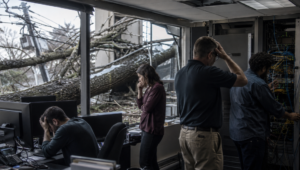
IT operations are often discussed in terms of servers, cloud systems, cybersecurity, uptime, backups, and network monitoring. Most organizations spend serious time thinking about firewalls, phishing attacks, software updates, endpoint protection, and disaster recovery. Those are all important. But one of the most overlooked threats to IT uptime may be standing outside the building right now.
A single unhealthy tree can cause more damage to an IT operation than many people realize. One falling tree can take out power lines, damage fiber connections, crush rooftop equipment, block access to a facility, interrupt emergency response, and trigger outages that affect employees, customers, vendors, and revenue. For businesses that rely on constant connectivity, the risk is not just about landscaping. It is about operational resilience.
Modern IT operations depend on physical infrastructure. Even cloud-based businesses still rely on local power, internet access, backup systems, network equipment, telecom lines, and people who need safe access to the workplace. When a tree failure interrupts any of those systems, the impact can move quickly from a property issue to a full IT disruption.
The Physical Side of IT Operations
IT leaders usually focus on the digital side of operations, but every digital system has a physical dependency. Routers need power. Servers need cooling. Employees need access to devices. Backup generators need clear space and proper ventilation. Internet service depends on cabling, poles, underground routes, and external utility infrastructure.
According to IBM’s overview of IT operations, IT operations involve delivering and supporting IT services that meet business needs. That definition sounds digital, but the real-world execution depends heavily on physical systems staying online. A company may have the best monitoring dashboard in the industry, but if a storm brings down a large tree and knocks out power or connectivity, the dashboard may simply become a record of the outage.
This is why facility risks should be part of IT risk planning. Trees near utility lines, data rooms, access roads, parking lots, server rooms, call centers, communication rooms, and backup power systems should not be treated as background scenery. They should be evaluated as part of business continuity planning.
How a Falling Tree Can Trigger a Chain Reaction
A falling tree rarely causes just one problem. It often creates a chain reaction. First, the tree may hit a power line or transformer. Then the building loses power. Backup batteries begin draining. If generators do not start properly, critical systems begin shutting down. If internet lines are damaged, cloud applications may become unreachable from the office. If phone systems depend on VoIP, incoming and outgoing calls may fail. If the building’s access route is blocked, IT staff may not be able to get onsite to troubleshoot equipment.
In many organizations, IT systems are tightly connected. A power outage can affect network switches, security cameras, access control systems, point-of-sale systems, file servers, printers, workstations, phone systems, and environmental controls. A tree that falls at 3:00 a.m. can become an operations emergency by 8:00 a.m., especially for companies that open early, serve customers online, or support remote employees.
The issue is not limited to large corporations. Medical offices, law firms, municipal buildings, schools, warehouses, retail stores, financial offices, manufacturers, and professional service companies all depend on stable IT infrastructure. A tree failure can interrupt scheduling systems, customer records, billing platforms, inventory tools, internal communications, and security systems.
Why IT Disaster Planning Should Include Outdoor Risk
Most disaster recovery conversations focus on cyber incidents, hardware failure, software errors, cloud outages, and human mistakes. Those are serious concerns, but they are not the only risks. Natural hazards and site-level conditions deserve attention too.
The NIST Contingency Planning Guide for Federal Information Systems emphasizes the importance of planning for disruptions that affect information systems. While many organizations interpret that through a technology lens, the broader lesson is that IT continuity requires identifying threats before they become emergencies. A tree leaning toward a building, a dead limb hanging over utility service, or roots compromising pavement near underground infrastructure may all represent preventable risks.
A professional Tree Hazard Assessment can help identify trees that may pose a risk to people, property, access, and infrastructure. For IT-driven organizations, this type of assessment can support a stronger continuity strategy by helping reduce the chance that preventable outdoor hazards will become expensive technology outages.
The Cost of Downtime Goes Beyond the Repair Bill
When a tree falls and damages infrastructure, the repair cost is only part of the problem. The larger cost may come from downtime. Employees may lose productive hours. Customers may be unable to reach the business. Online orders may stall. Support tickets may pile up. Security systems may go offline. Leadership may have to shift from planned work to emergency response.
TechTarget’s definition of disaster recovery describes disaster recovery as the ability to respond to and recover from an event that negatively affects business operations. That is exactly where tree-related risk fits. A tree failure may not sound like an IT disaster at first, but if it affects systems, access, communication, or service delivery, it belongs in the same planning conversation.
For organizations with service-level agreements, regulated data, public-facing systems, or customer support obligations, even a short outage can create serious problems. A business may recover power in a few hours but still spend days fixing secondary issues, restoring equipment, communicating with customers, and documenting what happened.
Power, Connectivity, and the Hidden Weak Points Around a Building
Power and internet connectivity are two of the most obvious IT dependencies affected by falling trees. Overhead power lines can be damaged by trunks, limbs, or shifting branches during high winds. Internet and telecom lines may run along the same poles or near the same external pathways. Even underground utilities can be affected indirectly by root systems, soil movement, drainage problems, or emergency excavation after a tree failure.
The AWS disaster recovery guidance explains that disaster recovery strategies can range from basic backups to more advanced multi-site approaches. That same layered thinking applies to local infrastructure. A business may use cloud backups and redundant systems, but it still needs to understand the local hazards that could disrupt access to those systems.
A company with cloud-based applications may feel protected because its data is not stored only onsite. However, if the office loses internet access, employees may still be unable to work. If the phone system depends on network connectivity, customers may not be able to call. If the building’s security system depends on power and internet, access and monitoring may become unreliable. Physical site risk can still interrupt cloud-first operations.
Tree Hazards Near Data Rooms, Rooftop Equipment, and Generators
Trees do not have to hit power lines to affect IT operations. A falling limb can damage rooftop HVAC equipment that supports temperature control for network rooms or server closets. A fallen tree can block access to a generator or damage the area around it. Debris can prevent maintenance teams from reaching electrical panels, utility meters, communication boxes, or equipment enclosures.
Data rooms and network closets are often sensitive to heat, humidity, and power fluctuation. If a tree-related event damages cooling equipment or causes repeated power interruptions, the result can be hardware stress, shutdowns, or equipment failure. That creates a situation where the tree did not directly touch IT equipment, but still caused an IT incident.
Wikipedia’s overview of information technology explains that IT includes systems used to create, process, store, retrieve, and transmit information. In a business setting, those systems are supported by far more than computers alone. They depend on the building, the utilities, the surrounding property, and the safety of the physical environment.
IT Operations News Shows That Outages Have Many Causes
IT operations news regularly highlights outages caused by software failures, cloud disruptions, data center problems, power issues, and infrastructure weaknesses. Data Center Dynamics’ outage coverage shows how frequently operational disruptions become major stories when they affect airlines, platforms, data centers, and large organizations.
The lesson for smaller and mid-sized businesses is simple. Outages do not need to be global to be damaging. A local outage can be just as disruptive for the company experiencing it. If a fallen tree takes down one office, one call center, one warehouse, one municipal department, or one professional firm, that organization still faces real operational consequences.
IT leaders should not wait for a dramatic event to think about environmental risk. Just as software vulnerabilities are patched before they are exploited, outdoor hazards should be evaluated before they fail. A tree that is dead, declining, cracked, leaning, storm-damaged, or positioned near critical infrastructure deserves attention before the next wind event exposes the weakness.
Business Continuity Starts Before the Emergency
A strong IT operation is not only measured by how fast it recovers. It is also measured by how well it reduces avoidable risk. Disaster recovery plans, backup systems, cybersecurity tools, monitoring platforms, and incident response procedures all matter. But prevention should be part of the strategy too.
CIO’s coverage of service outage response reinforces the importance of planning and testing before systems go down. The same principle applies to site hazards. If an organization only thinks about trees after one has fallen, it is already in response mode. If it evaluates risk ahead of time, it has more control.
A practical IT continuity plan should include coordination between IT, facilities, property management, leadership, and qualified tree professionals. IT teams can identify which systems are most critical. Facilities teams can identify physical access points, utility routes, generator locations, and vulnerable areas. Tree professionals can assess tree condition, likelihood of failure, and potential targets. Together, these groups can create a more complete risk picture.
What Businesses Should Look For Around IT-Critical Areas
Businesses do not need to become tree experts, but they should know when a tree deserves professional review. Warning signs may include dead limbs, large cracks, fungal growth, cavities, lifting roots, sudden leaning, hanging branches, storm damage, soil movement, or branches extending over utility lines and building systems.
Special attention should be given to trees near electrical service lines, telecom lines, server rooms, generator pads, HVAC units, access roads, employee parking, emergency exits, security infrastructure, and exterior equipment cabinets. These areas are not just property features. They are part of the IT support environment.
Organizations should also think seasonally. Storm season, heavy rain, snow, ice, drought, and high winds can all change the risk profile of a property. A tree that looked stable during calm weather may become dangerous during extreme conditions. Regular assessments help businesses avoid relying on guesswork.
A Smarter Way to Protect IT Uptime
The strongest IT operations strategies are built on visibility. Teams monitor networks because hidden problems can become outages. They review logs because small warnings can reveal larger issues. They test backups because assumptions are dangerous. Tree risk should be approached the same way.
A falling tree may seem like a facilities problem, but the impact can reach deep into IT operations. It can cut power, break connectivity, stop communications, block access, damage cooling systems, and force teams into emergency recovery. For companies that depend on technology, ignoring physical outdoor risk creates an unnecessary blind spot.
The goal is not to remove every tree or treat every branch as a crisis. The goal is to identify meaningful risks, prioritize action, and protect the systems that keep the organization running. In that sense, tree hazard planning is not separate from IT operations. It is part of operational resilience.
Conclusion
One falling tree can do more than damage a roof, fence, vehicle, or utility pole. It can interrupt an entire IT operation. It can stop employees from working, prevent customers from reaching the business, disrupt cloud access, damage equipment, and turn an ordinary day into a recovery effort.
IT leaders, facility managers, property owners, and business decision-makers should view tree risk as part of a broader continuity strategy. The same organization that invests in cybersecurity, backups, monitoring, and disaster recovery should also pay attention to the physical environment supporting those systems.
Reliable IT operations depend on more than software and servers. They depend on power, connectivity, access, cooling, safety, and preparation. A healthy technology strategy looks outside the building as well as inside it. When businesses identify tree hazards before they fall, they protect more than property. They protect uptime, trust, productivity, and the operation itself.